Passwords Are Dying: What Americans Need to Know Before the Old Rules Stop Working Entirely
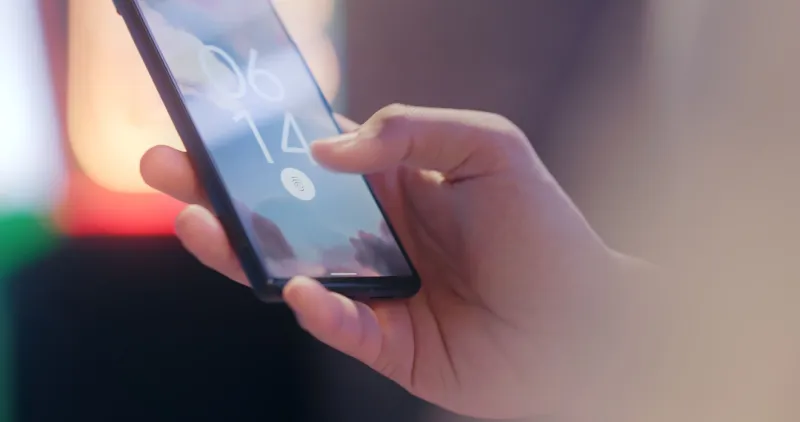
For most of us, password hygiene was drilled in like a fire drill: make it long, mix in symbols, never reuse it, change it every ninety days. That advice was never particularly enjoyable to follow, but it worked—at least for a while. In 2025, the threat environment has evolved so dramatically that these familiar rules are not just inconvenient. In many contexts, they are genuinely insufficient.
This is not a reason to panic. It is, however, a reason to pay close attention.
Why the Traditional Password Model Is Structurally Flawed
Passwords fail for a reason that has nothing to do with how clever or careful you are. They are, at their core, shared secrets. When you create a password and hand it to a website, that website stores a version of it—typically a hashed representation. The moment that company experiences a data breach, your secret is potentially in the hands of strangers.
According to research from multiple cybersecurity firms, billions of username-and-password combinations are actively circulating on dark web marketplaces right now. Many of those credentials belong to Americans who have no idea their information was ever compromised. Attackers use automated tools to test these stolen combinations across hundreds of platforms in minutes. The practice is so efficient and so widespread that even a strong, unique password becomes a liability the moment the service holding it is breached.
The problem is systemic, not personal. No amount of individual discipline fully resolves a flaw that lives inside the infrastructure itself.
The Rise of Passkeys and Why They Matter
Passkeys represent the most significant shift in everyday authentication in a generation. Supported by major technology companies including Apple, Google, and Microsoft, passkeys eliminate the shared-secret problem entirely. Instead of storing a password on a remote server, passkey authentication relies on a cryptographic key pair. Your device holds the private key. The website or application holds only the public key. When you log in, your device proves it has the private key without ever transmitting it.
The practical result is striking: there is nothing for attackers to steal from a breached server, because the server never held your actual credential in the first place.
For everyday Americans, passkeys typically surface as a prompt to authenticate with Face ID, Touch ID, or a Windows Hello PIN. The login feels simple. Behind the scenes, the cryptographic exchange is far more robust than any password a human could reasonably memorize.
Major platforms including Google, Apple, PayPal, and Best Buy have already rolled out passkey support. Adoption is accelerating, and most security professionals expect passkeys to become the dominant authentication method for consumer accounts within the next few years.
Biometrics: Powerful, But Not Invincible
Biometric authentication—fingerprints, facial recognition, voice ID—adds a layer of security that is intuitively appealing. Your fingerprint cannot be guessed, and your face cannot be phished in the traditional sense. For those reasons, biometrics paired with passkeys represent a genuinely stronger baseline than passwords alone.
However, a growing category of threats is beginning to challenge biometric systems in ways that were largely theoretical just a few years ago. Deepfake voice cloning, in particular, has matured to the point where attackers are attempting to spoof voice-based authentication systems used by financial institutions and customer service platforms. Sophisticated audio generation tools can now replicate a person's voice from a relatively small sample—sometimes drawn from publicly available recordings on social media.
Facial recognition systems face analogous pressure. While most consumer-grade implementations include liveness detection designed to block static photos, adversarial techniques are advancing. The threat is not yet widespread at the consumer level, but it is no longer confined to espionage scenarios.
The takeaway is not that biometrics are unreliable. It is that no single factor—biometric or otherwise—should be treated as an impenetrable wall.
Multi-Factor Authentication: Still Essential, But Not Uniform
If passkeys are the future and biometrics are a valuable component, multi-factor authentication remains the most important immediate step for any American who has not yet fully embraced it.
Not all multi-factor authentication is created equal, though. SMS-based two-factor authentication—where a code is texted to your phone—is significantly weaker than app-based authenticators or hardware security keys. SIM-swapping attacks, in which criminals convince a mobile carrier to transfer your phone number to a device they control, can neutralize SMS codes entirely. This technique has been used to compromise high-value accounts belonging to executives, investors, and public figures.
Authenticator applications, such as those generating time-based one-time passwords, are meaningfully harder to defeat. Hardware security keys—small physical devices that plug into a USB port or tap against an NFC reader—represent the strongest widely available option for accounts that warrant the highest protection.
What Average Americans Should Prioritize Right Now
The landscape is changing, but the practical steps are manageable. The following priorities reflect where the threat environment actually stands in 2025:
Adopt passkeys wherever they are offered. When a service you use prompts you to set up a passkey, accept. The transition requires minimal effort and meaningfully reduces your exposure to credential theft.
Upgrade from SMS two-factor authentication. For your most sensitive accounts—banking, email, investment platforms—switch to an authenticator app or hardware key if the service supports it.
Audit your existing passwords with a dedicated manager. A reputable password manager will flag reused and compromised credentials, giving you a clear list of accounts that need attention. This remains important even as passkeys grow, because many services will rely on passwords for years to come.
Be skeptical of voice-based verification requests. If you receive an unexpected call in which the caller claims to represent your bank and asks you to verify your identity by voice, treat it with suspicion. Legitimate institutions generally do not initiate authentication sequences through unsolicited calls.
Keep your security software current and comprehensive. Authentication improvements protect your accounts, but they do not protect your devices from malware designed to harvest credentials before they ever leave your keyboard. Comprehensive endpoint protection remains a foundational layer that works alongside stronger authentication rather than in competition with it.
The Adaptive Security Imperative
One of the more disorienting aspects of the current moment is that the threat landscape is not static. Attackers adapt. When one avenue closes, they locate another. The deepfake voice spoofing attempts targeting voice authentication are a direct response to the growing use of biometrics. As passkeys become common, researchers expect adversarial focus to shift toward device compromise—targeting the phones and laptops that store private keys rather than attacking remote servers.
This is precisely why static security habits, however well-intentioned, are insufficient on their own. Security approaches that monitor behavior, flag anomalies, and update their threat models in real time provide a meaningful advantage over point-in-time solutions that assume yesterday's threats will look the same tomorrow.
The old rules of password hygiene were written for a different era. Honoring them while ignoring everything that has changed since is a bit like installing a deadbolt on a door that no longer has walls around it. The lock still works. The protection it provides, however, is far more limited than it appears.
Understanding what has changed—and responding accordingly—is the only approach that holds up in 2025 and beyond.