The Square on the Menu Is Not a Menu: A 2026 Field Guide to QR Code Scams
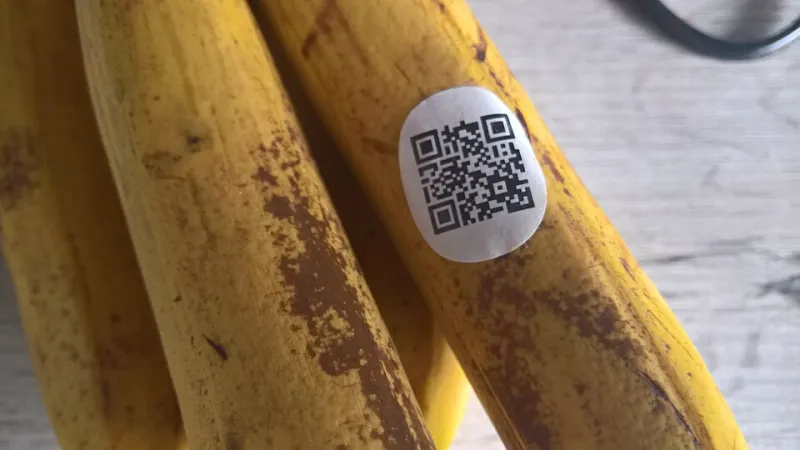
Photo: Donald Trung Quoc Don (Chữ Hán: 徵國單) - Wikimedia Commons - © CC BY-SA 4.0 International.(Want to use this image?)Original publication 📤: --Donald Trung 『徵國單』 (No Fake News 💬) (WikiProject Numismatics 💴) (Articles 📚) 20:36, 19 April 2021 (UTC), CC B
A sticker on a parking meter in a mid-sized American city looks unremarkable: a black-and-white square, a short line of instructions, a municipal logo. A driver scans it, lands on a payment page that looks correct, enters a card number, and drives away. The citation arrives three weeks later. The payment page was never the city's.
Quick-response codes have become so ordinary that most people no longer think of scanning as an action worth deliberating. That is precisely the condition these schemes require. The technique — sometimes called quishing — exploits a genuine feature of the format: a QR code is a link with the label torn off. You cannot see where it goes until you are already there.
Why the Format Works So Well for Attackers
A printed code carries an implicit endorsement. It sits on a laminated card, a window sticker, a receipt, or a table tent, in a place where official notices belong. There is no sender address to inspect, no domain to read, and no hover preview as there would be on a desktop browser. The gesture itself — raising a phone, tapping a prompt — has been trained into the public by years of contactless convenience.
Most importantly, the code can be replaced in seconds. A printed overlay no larger than a postage stamp, applied over the legitimate square, redirects every scan from that point forward without disturbing the surface beneath.
Where the Codes Are Appearing Now
- Parking meters and pay stations, where the promise of a faster payment suppresses scrutiny.
- Restaurant tables, replacing paper menus with a link that may point to a lookalike ordering page.
- Package and delivery notices, including cards left at the door claiming a redelivery fee is owed.
- Event and transit tickets, where codes circulate through resale markets and screenshots.
- Utility and municipal bills, some demanding immediate payment to avoid shutoff.
- Charity appeals and fundraising flyers, particularly around the winter giving season.
Preview Before You Point
Every current smartphone camera offers a way to inspect a destination before committing. On iOS devices, a long press on the code in the camera view or in Photos surfaces the link so it can be read without opening it. Android camera apps typically display the decoded address beneath the scan prompt, and Google Lens will show it as text. Third-party scanner applications frequently include a preview setting as well.
Read the address that appears. A legitimate municipal payment portal will sit on a recognizable government domain. A restaurant menu will usually resolve to the restaurant's own site or a well-known ordering platform. A short link with no visible relationship to the organization, or a domain assembled from misspelled words, is a reason to stop.
Recognizing a Code That Has Been Altered
Physical inspection still matters. Look for a sticker applied over an existing code, particularly one whose edges lift slightly or whose surface reflects differently from the surrounding print. Check alignment: a square that sits a few degrees off from the printed frame, or that covers a partial design, is suspect. Handwritten additions, codes printed in low resolution, and codes accompanied by a shortened URL underneath all warrant caution.
On the payment side, the strongest rule is simple: a QR code should never lead directly to a page demanding a card number, a bank login, or a one-time code on first arrival. Legitimate services route through an app or an established checkout that identifies the merchant.
When a Code Resolves Into a Phishing Page
If the destination asks you to sign in, look closely at the address bar before typing anything. Credential harvesting pages reproduce corporate and government branding with alarming fidelity but cannot hide the domain in the browser chrome. If you have already entered a password, change it immediately on a device you trust and enable multi-factor authentication if it is not already active. If you entered card details, call the issuing bank rather than waiting for a statement.
Reporting Without Passing It On
Screenshots shared in group chats spread the code as effectively as the scammer did. Do not forward the image. Instead, describe the location in words, and report the physical code to the business or agency whose name it carries — a restaurant manager, a parking authority, a property manager. Most municipalities and consumer protection offices maintain a fraud reporting line, and federal reporting through the Internet Crime Complaint Center gives investigators a record that individual complaints alone cannot produce.
If the code was received by email, forward the message to the impersonated organization's abuse address rather than to friends. If it was in a public place, you can peel away a clearly fraudulent overlay so the next person does not scan it — and photograph it first.
A Habit That Costs Three Seconds
The convenience of these codes is real, and refusing to use them is not a practical security posture for most people. The workable habit is smaller: preview the link, read the domain, and treat the scan as the beginning of a decision rather than the end of one. Three seconds of reading is, in most cases, the entire difference between paying for parking and paying a stranger.