While You Sleep, They Work: How Cybercriminals Exploit the Overnight Hours and What Keeps Your Devices Safe Around the Clock
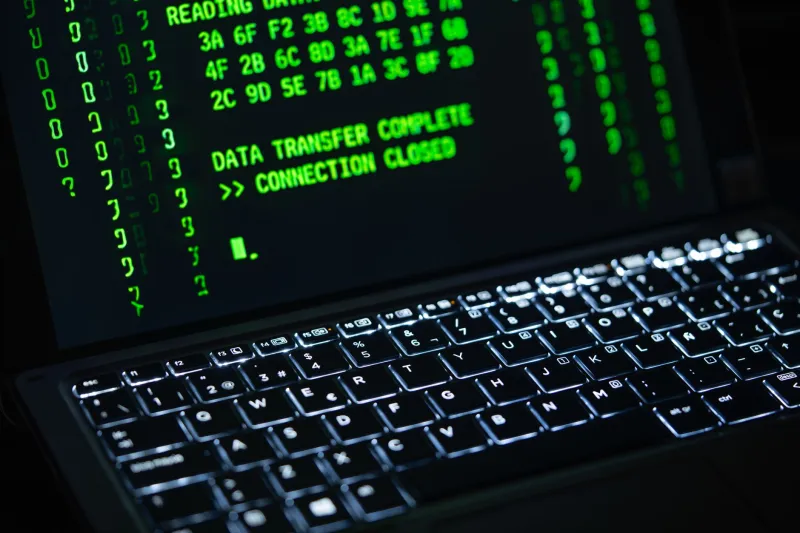
At 3 AM, most American households are quiet. Phones rest on nightstands. Laptops sit idle on kitchen tables. The family desktop hums softly in a back room, its screen dark. To the average person, that stillness represents safety — nothing is happening, so nothing can go wrong.
To a cybercriminal, that stillness is an invitation.
The assumption that digital threats operate on a conventional schedule is one of the most dangerous misconceptions in personal cybersecurity today. Attackers — and, more precisely, the automated tools they deploy — do not clock out at 5 PM. They are, in many respects, most active precisely when you are not.
The Deliberate Logic of the Late-Night Attack Window
There is nothing accidental about the timing of overnight cyberattacks. It reflects a calculated understanding of human behavior and institutional response times.
When a ransomware payload activates at 3 AM, it can encrypt thousands of files before a single alert reaches a conscious human being. When an automated credential-stuffing campaign begins testing stolen username and password combinations against banking portals in the early morning hours, it does so knowing that fraud detection teams are operating on skeleton staffing. When a phishing email lands in an inbox at midnight, it sits unexamined for hours — giving any embedded tracking pixel or malicious link time to do its work the moment a bleary-eyed user opens the message with their guard down at 6 AM.
Researchers studying cyberattack patterns have documented consistent clustering of malicious activity during off-peak hours, particularly between midnight and 6 AM local time in target regions. This is not coincidental. Sophisticated threat actors — whether operating independently or as part of organized cybercrime networks — deliberately schedule automated campaigns to coincide with periods of minimal human oversight.
Automated Tools Are the Night Shift
It is worth understanding that most overnight attacks are not carried out by a person sitting at a keyboard in real time. They are the product of automated malware infrastructure: botnets, exploit kits, and scripted attack frameworks that execute pre-programmed instructions without any ongoing human involvement.
A botnet, for example, might be instructed to begin distributing ransomware payloads to a list of compromised machines at a precise time. The criminal who configured it may be asleep themselves. The attack proceeds regardless, marching through its target list with mechanical indifference to the hour.
This automation changes the threat calculus significantly for everyday Americans. You cannot negotiate with a script. You cannot appeal to a program's sense of timing or mercy. The only meaningful defense is one that is equally automated — a protection layer that monitors, detects, and responds without requiring you to be awake to trigger it.
What Actually Happens to Your Device During an Overnight Attack
To appreciate the stakes, consider the sequence of events that can unfold on an unprotected or under-protected device during a single overnight window.
First, an initial access point is exploited — perhaps a vulnerability in an outdated application, a weak router credential, or a piece of malware quietly installed days earlier through a deceptive download. Once inside, the malicious payload begins its work. In the case of ransomware, that means systematically locating and encrypting documents, photos, financial records, and any other files of value. In the case of a banking trojan, it means lying dormant until you open a financial application, then capturing your credentials in real time.
By the time you wake up, the damage may be complete. Files are locked. Accounts are compromised. In some cases, the attacker has already monetized the breach — selling your credentials on dark web marketplaces or initiating fraudulent transactions — before your alarm goes off.
The window between initial compromise and discovery is sometimes called the "dwell time," and it is one of the most consequential metrics in cybersecurity. The longer an attacker remains undetected, the more damage they can inflict. Overnight attacks are specifically engineered to maximize dwell time.
Why Passive Vigilance Is Not Enough
Many Americans operate under the assumption that because they practice reasonable digital hygiene — avoiding suspicious links, using strong passwords, not opening unexpected attachments — they are sufficiently protected. That assumption has real limits.
No amount of conscious, behavioral caution protects a device when its owner is unconscious. Clicking carefully during waking hours does nothing to stop an automated exploit from probing a software vulnerability at 2 AM. Recognizing phishing attempts is a valuable skill, but it cannot be applied to an attack that unfolds entirely in the background, without any user interaction required.
This is the fundamental gap that real-time, always-on security software is designed to fill. Protection that only activates when you are actively using a device is, by definition, protection that fails precisely when overnight attacks are designed to succeed.
The Case for 24/7 Threat Monitoring
Norton's real-time threat monitoring is built around a straightforward premise: threats do not wait, and neither should your defenses. The platform operates continuously, scanning for malicious activity, flagging anomalous behavior, and neutralizing threats regardless of the time of day or whether the device's owner is present.
This always-on architecture addresses several specific vulnerabilities that overnight attacks exploit:
Continuous file system monitoring ensures that if ransomware begins encrypting files at any hour, the behavior is detected and interrupted before the damage becomes irreversible.
Real-time network traffic analysis can identify suspicious outbound connections — the kind a banking trojan might make when attempting to transmit captured credentials — and block them before data leaves the device.
Automatic threat definition updates mean that even newly identified malware strains, discovered and catalogued during the day, are added to the detection library without requiring any manual action from the user. Your device's defenses grow stronger overnight, even as threats evolve.
Intrusion detection capabilities monitor for the kind of lateral movement and privilege escalation that characterizes post-compromise activity, catching attackers who have already gained initial access before they can complete their objectives.
Together, these layers create a protection posture that does not depend on user awareness or wakefulness to function. The system is, in effect, standing watch while you sleep.
Practical Steps to Reinforce Your Overnight Defense
Beyond deploying comprehensive security software, several habits can meaningfully reduce your household's vulnerability during off-hours:
- Enable automatic software updates on all devices, scheduled to run overnight. Unpatched vulnerabilities are among the most common entry points for automated attacks, and updates that install while you sleep eliminate them before the next day's use.
- Ensure your home router firmware is current. Routers are frequently targeted entry points, and outdated firmware represents a known, exploitable weakness that attackers actively scan for.
- Use multi-factor authentication on all critical accounts. Even if credentials are captured during an overnight attack, MFA creates an additional barrier that automated tools typically cannot bypass without a secondary confirmation step.
- Avoid leaving sensitive applications open or logged in overnight. Closing financial or email applications before bed limits what an attacker can access even in the event of a compromise.
- Review your security software's activity logs periodically. Most robust security platforms maintain detailed records of threats detected and actions taken. Reviewing these logs occasionally provides insight into the threat landscape your devices actually face — and confirms that your protection is actively working.
A Threat That Never Sleeps Requires a Defense That Doesn't Either
The 3 AM attack is not a hypothetical scenario reserved for corporations or high-value targets. It is a documented, recurring reality for ordinary American households, driven by automated tools that operate at scale and target opportunity rather than prominence.
The most effective response is not paranoia — it is preparation. Deploying security software that monitors continuously, updates automatically, and responds without requiring human intervention closes the window that overnight attackers depend on. It transforms the quiet hours from a period of vulnerability into one of uninterrupted, unseen protection.
Your devices should never be unguarded simply because you are unavailable to guard them. With the right tools in place, they do not have to be.